Inside the Mechanics of Reward Systems: What Drives Engagement in Poker and Casino Environments
Geschrieben von Iris Wolf · 19.8.2026

Inside the Mechanics of Reward Systems: What Drives Engagement in Poker and Casino Environments
Reward systems in poker rooms and casino environments operate through structured programs that track player activity and distribute incentives based on measurable participation levels, and these mechanisms combine elements of points accumulation, tiered benefits, and targeted promotions to maintain consistent engagement across different player segments. Data collected from gaming operators shows that loyalty programs often calculate rewards using algorithms that factor in hours played, average bet sizes, and game variety, which creates a feedback loop where continued activity unlocks progressively higher value returns.
Core Components of Casino Reward Structures
Operators design these systems around core components including comped services such as meals and hotel stays, cashback percentages on losses, and exclusive access to events or tournaments, while poker-specific rewards frequently emphasize rakeback percentages and milestone bonuses tied to hands dealt or tournaments entered. Studies from academic institutions indicate that players respond to immediate feedback mechanisms like digital point trackers displayed on screens or apps, and these tools allow real-time visibility into progress toward redemption thresholds. In August 2026, updated reporting from regulatory bodies across multiple jurisdictions highlighted how integrated mobile applications have increased the frequency of reward redemptions by streamlining the process for claiming benefits without interrupting play sessions.
What's interesting is how tiered membership levels function as progression markers, where bronze, silver, gold, and platinum statuses deliver escalating perks such as priority seating in poker areas or higher cashback rates, and operators adjust these thresholds periodically based on aggregated player data to balance retention against operational costs. Research indicates that such stratification encourages longer session durations because players aim to reach or maintain higher tiers before the qualification period resets.
Psychological Drivers Behind Sustained Participation
Engagement in these environments stems from principles of variable reinforcement schedules where rewards arrive unpredictably, and this approach mirrors patterns observed in other behavioral contexts that maintain high activity levels over time. Observers note that poker players often cite the combination of skill recognition through leaderboard placements and tangible rewards like tournament entries as key factors that extend their involvement beyond individual sessions. Figures from industry reports reveal that environments incorporating both social recognition elements and material incentives see higher repeat visit rates compared to those relying solely on one type of reward.
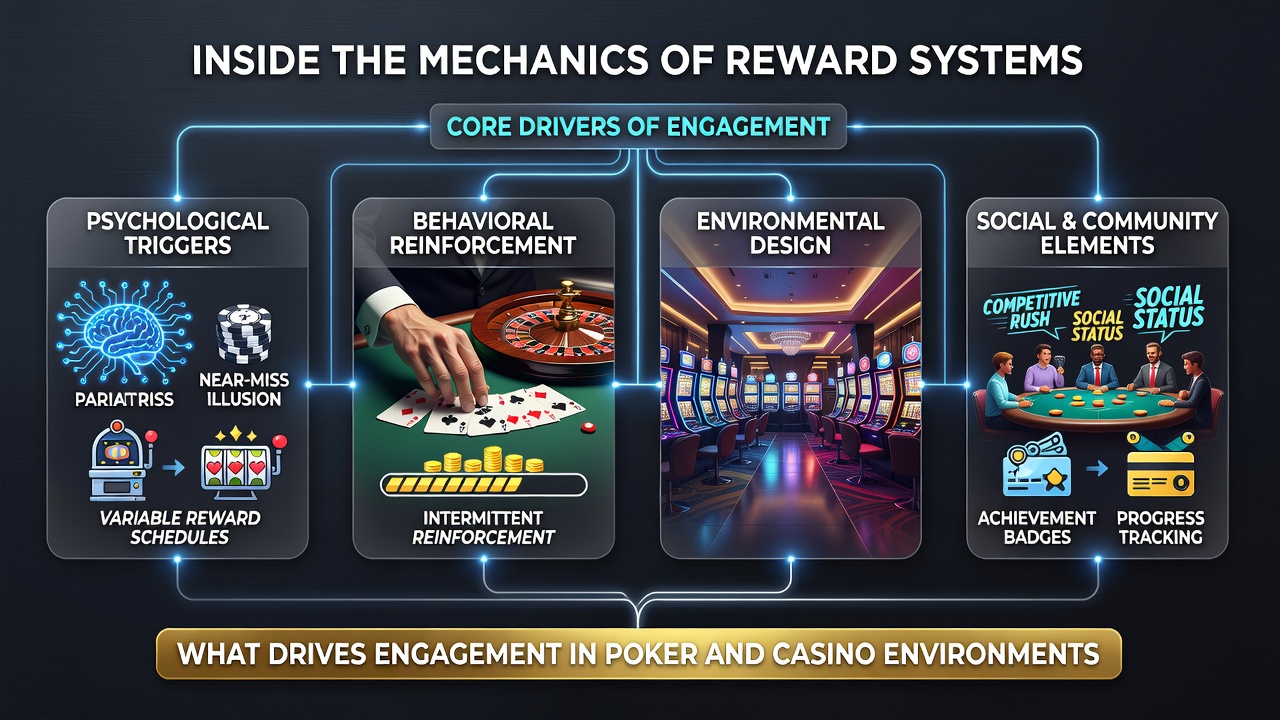
Turns out that personalized offers generated from individual play histories prove particularly effective at driving targeted engagement, since they align incentives with demonstrated preferences such as specific game types or preferred times of play. Data from the Public Health Agency of Canada demonstrates measurable shifts in participation patterns when operators deploy segmented reward campaigns that differentiate between recreational participants and more dedicated players. And operators continue to refine these approaches through ongoing analysis of redemption patterns and session length correlations.
Implementation Across Poker and Table Game Settings
Poker environments integrate reward mechanics differently from slot or table game floors because the skill component allows for distinct tracking metrics like win rates and tournament cashes, which feed into customized bonus structures that reward consistent performance rather than pure volume alone. Researchers discovered through longitudinal tracking that players receiving hybrid rewards combining immediate small incentives with larger periodic payouts maintain steadier engagement levels across months. One example involves programs that award additional tournament tickets after accumulating a set number of cash game hours, creating bridges between different formats within the same venue.
Regulatory updates scheduled for release in late 2026 are expected to require greater transparency in how reward algorithms calculate player eligibility, and this development follows patterns already established in several Australian jurisdictions where mandatory disclosure of odds and terms has become standard practice. The Australian Gambling Research Centre has documented corresponding changes in player behavior following similar transparency measures introduced in prior years.
Conclusion
Reward systems in poker and casino settings rely on interconnected tracking, tier progression, and personalized incentive delivery to sustain player activity, with evidence from multiple regulatory and research sources confirming their measurable impact on session frequency and duration. Continued evolution of these programs incorporates technological advances in data analysis and mobile integration while responding to shifting compliance requirements across regions. Observers note that the balance between immediate feedback and long-term benefit structures remains central to how these environments maintain consistent participation levels into future periods.