How Regulatory Shifts Shape Bonus Structures Across Live Poker and Table Game Offerings
Geschrieben von Katja Washington · 26.8.2026
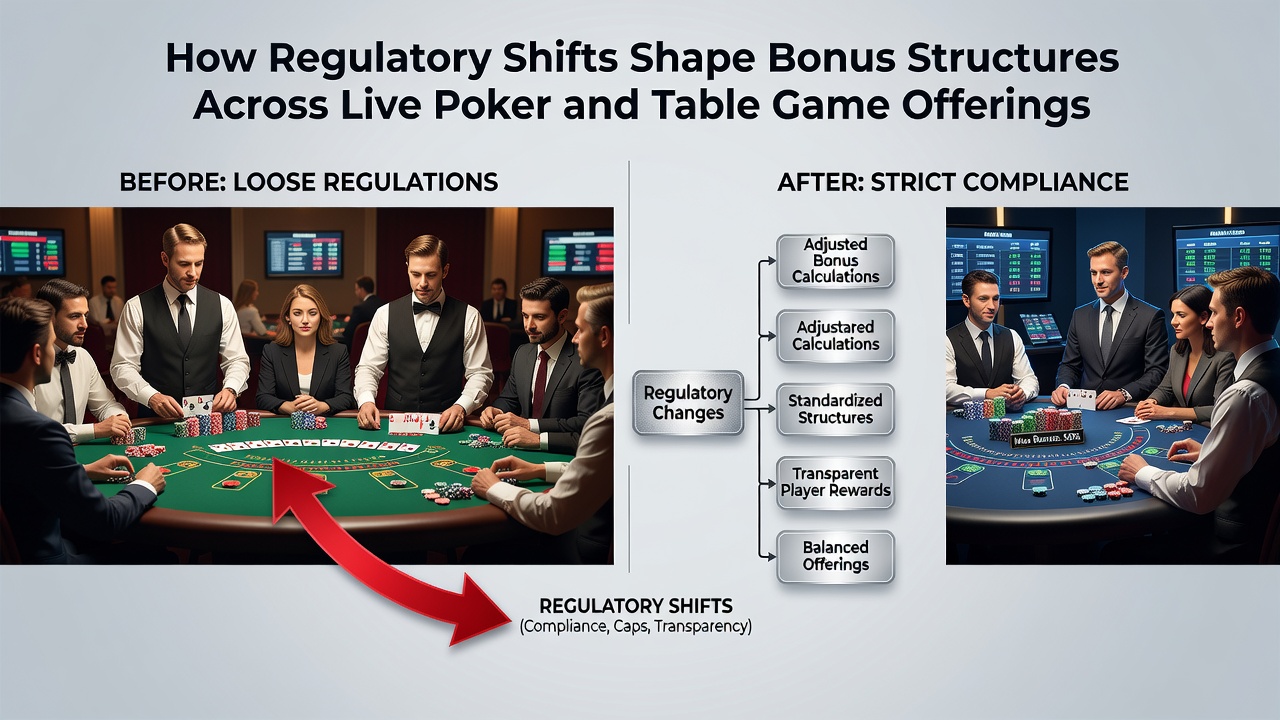
How Regulatory Shifts Shape Bonus Structures Across Live Poker and Table Game Offerings
Regulatory changes continue to redefine how operators structure bonuses in live poker rooms and table game areas, with adjustments appearing in response to evolving compliance standards across multiple jurisdictions. Data from industry reports shows that operators adjust promotional mechanics such as rake rebates, match credits, and comp point valuations to align with new reporting obligations and player protection measures. Those who monitor these developments observe that shifts often target transparency around bonus terms, contribution rates toward wagering requirements, and restrictions on certain promotional formats that previously crossed into prohibited territory.
Key Drivers Behind Recent Adjustments
Legislative updates in North American and European markets have prompted operators to revise bonus formulas, particularly where live dealer environments intersect with digital tracking systems. Nevada Gaming Control Board records indicate that revised rules on promotional allowances took effect in 2024, requiring clearer disclosure of bonus eligibility tied to table minimums and session durations. Similar patterns emerged in Canadian provinces where provincial regulators introduced caps on bonus values relative to average bet sizes, forcing poker rooms to recalibrate loyalty tiers that previously rewarded high-volume players with unrestricted cashback percentages.
Operators responded by converting some cash bonuses into non-cashable credits that apply only to specific table game variants, a move that satisfies contribution caps while preserving player engagement. Research from academic sources tracking gambling behavior reveals that such modifications correlate with reduced dispute rates around bonus redemptions, especially in live poker settings where hand histories and session data feed directly into compliance audits.
Effects on Live Poker Bonus Mechanics
Live poker environments face distinct pressures because bonuses often involve rakeback percentages or tournament ticket awards that depend on tracked play volume. When regulators tighten rules around player fund segregation, operators shift toward time-based comps rather than direct cash equivalents. One study from a research institution in Australia documented how these changes reduced the frequency of large upfront sign-up bonuses in favor of staggered rewards earned through consistent participation at cash tables and tournaments.
What's notable is the way operators now tie poker bonuses to responsible gaming thresholds, such as session time limits or loss limits that automatically adjust available rewards. This approach satisfies new audit requirements while maintaining competitive offerings against online alternatives. Observers note that August 2026 marks the scheduled rollout of enhanced data-sharing protocols in several EU member states, which will require real-time reporting of bonus redemptions linked to live table activity and may accelerate further restructuring of rake structures.

Table Game Offerings and Compliance Pressures
Table games such as blackjack, roulette, and baccarat present different bonus challenges because promotional structures frequently involve match play coupons or loss rebates that directly affect house edge calculations. Regulatory bodies in multiple regions have introduced requirements that these bonuses contribute differently to playthrough obligations depending on the game type, leading operators to segment offerings by table category. Figures from government sources show that blackjack promotions now often carry higher contribution rates toward requirements than roulette bonuses, a distinction designed to prevent bonus abuse while complying with fairness standards.
Operators adapt by offering tiered rewards that scale with table minimums, ensuring that high-limit rooms receive distinct bonus frameworks compared to low-stakes areas. This segmentation allows compliance teams to track promotional spend more precisely against revenue reports submitted to oversight agencies. Data indicates that such differentiation has become standard practice since mid-2025 updates in several licensing jurisdictions.
Looking Ahead to August 2026
Preparations for August 2026 include anticipated updates to cross-border data protocols that will affect how multi-jurisdictional operators manage unified bonus systems across live poker and table game floors. Industry associations have published guidance documents outlining expected changes to bonus valuation methods, particularly where live play data feeds into centralized responsible gaming databases. Those who track these timelines anticipate that operators will emphasize modular bonus designs capable of quick reconfiguration when new contribution percentages or eligibility rules activate.
Academic analyses of prior regulatory cycles suggest that early adoption of flexible systems reduces operational disruptions during transition periods. Operators in regions preparing for these deadlines have already begun testing bonus structures that separate live table rewards from digital platform incentives, creating clearer audit trails for regulators.
Conclusion
Regulatory evolution continues to influence bonus architecture in live poker and table game settings through requirements around transparency, contribution weighting, and player safeguards. Operators adjust structures in measurable ways that align with jurisdiction-specific mandates, and upcoming deadlines such as those in August 2026 will likely extend this pattern of incremental refinement. The result remains a landscape where bonus offerings reflect ongoing compliance priorities while supporting continued operation of live gaming environments.